Back to Gallery
TACTICS
Weaver vs Fighting Stance
Weaver = range-derived, tension-based, static. Modern stance = fight-derived, structure-based, dynamic.
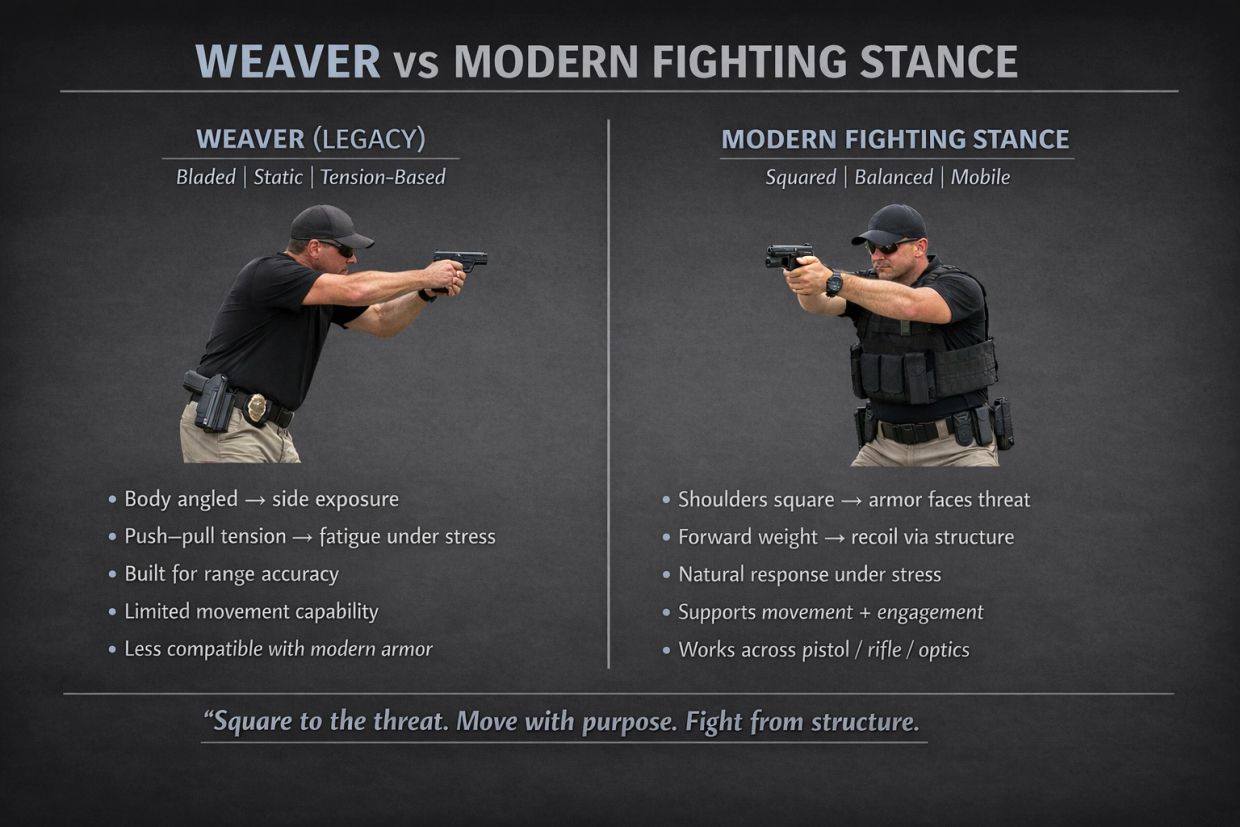
Weaver Stance
Range solution — 1950s–70s competition shooting
- →Bladed body, bent support arm, push-pull tension
- →Designed for precision pistol shooting
- →Worked well with iron sights and slower, deliberate fire
- →Blades the body — exposing unprotected side areas
- →Relatively static — doesn't transition well to movement
- →Less stable for one-handed or moving shooting
Modern Fighting Stance
Athletic, squared, forward-leaning
- →Feet like a boxer or linebacker
- →Shoulders squared — matches body's instinctive reaction
- →Plates face the threat directly — maximizes survivability
- →Recoil management via skeletal alignment, not tension
- →Seamlessly supports walking, running, cutting angles
- →Works with pistols, rifles, red dots — same body mechanics
The shift happened because real gunfights demanded movement and survivability. Equipment (armor, optics) changed. Training evolved from marksmanship to combat performance. This parallels the broader doctrine shift: from controlled environments to dynamic, survivable systems.
It's all the same shift: from controlled environments → dynamic, survivable systems.