Back to Gallery
MEDICAL
The Survival Gap
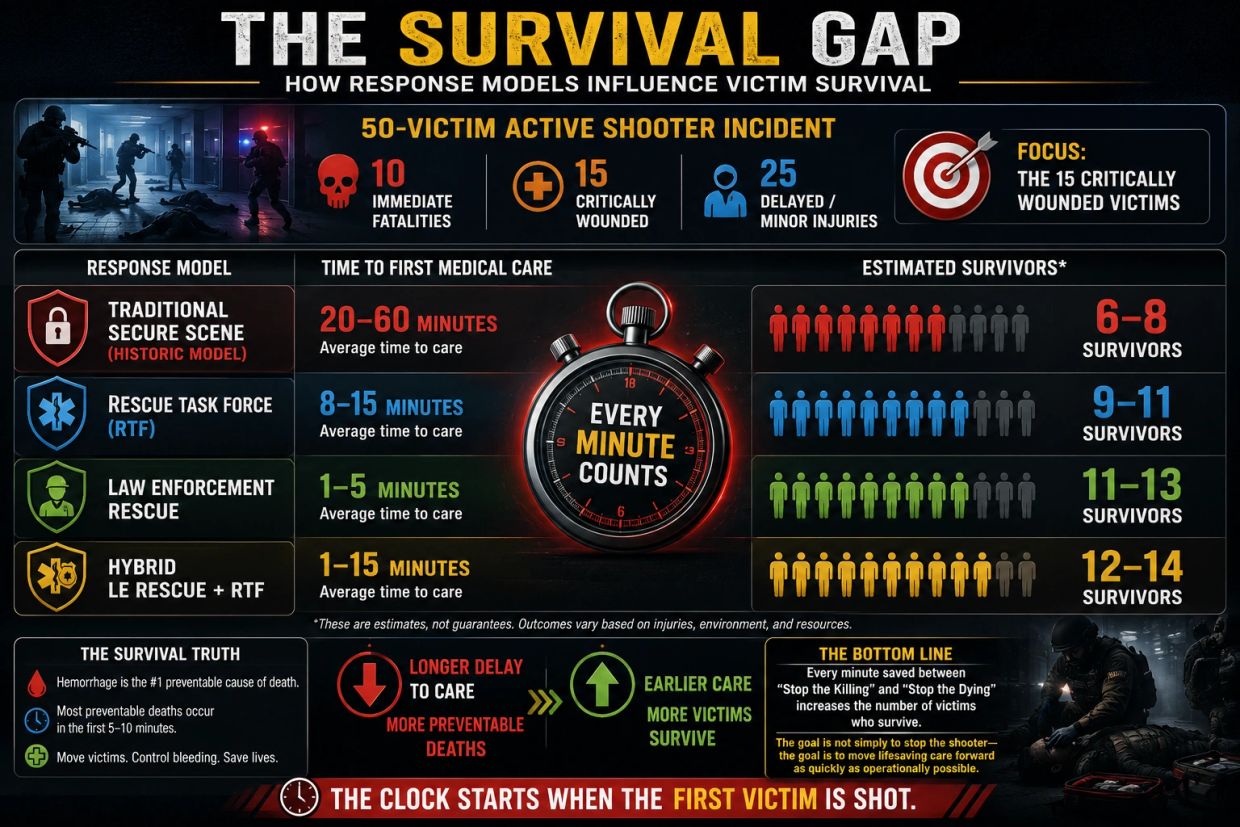
Comparing three active shooter response models. Every minute between "Stop the Killing" and "Stop the Dying" consumes survivability.
The Three Casualty Groups
Immediate Deaths
15–30%
Catastrophic brain injury, aortic disruption, massive cardiac destruction. Die regardless of how quickly rescuers arrive.
Potentially Survivable
10–20%
Extremity hemorrhage, junctional hemorrhage, tension pneumothorax, airway obstruction. These are the lives won or lost during the transition.
Delayed Casualties
Variable
Abdominal wounds, liver, splenic, lung injuries. May survive for tens of minutes to hours but require evacuation and definitive care.
Response Model Comparison (50-Victim Scenario)
| Model | Time to Care | Potential Survivors (of 15 critical) |
|---|---|---|
| Traditional Secure Scene | 20–60 min | 6–8 |
| Rescue Task Force | 8–15 min | 9–11 |
| LE Rescue | 1–5 min | 11–13 |
| Hybrid LE + RTF | 1–5 min + RTF | 12–14 |
What Matters Most
- First 3–5 min:Tourniquet, movement from kill zone, airway positioning
- First 10 min:RTF treatment, extraction, triage
- First 30 min:Surgery, blood products, definitive care
The clock does not start when Fire/EMS enters. The clock starts when the first victim is shot.