TACTICS
The Most Dangerous Part of the Call May Be the Drive There
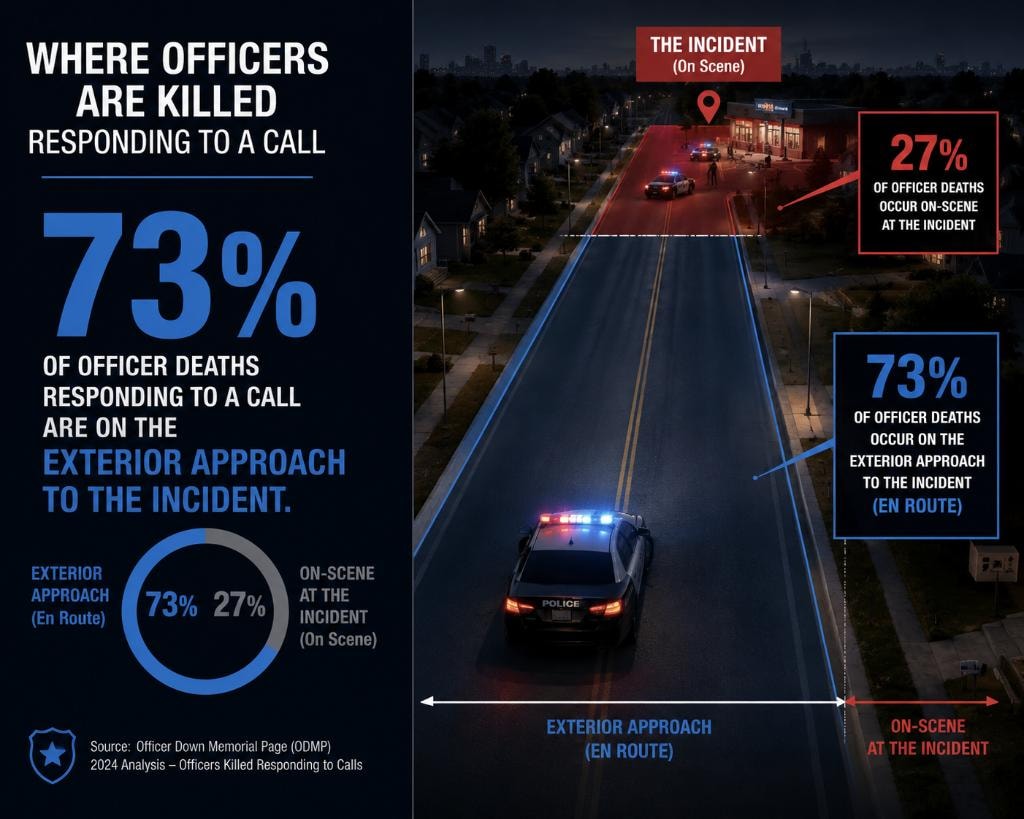
The statistics tell a different story than most officers expect — 73% of officer deaths responding to a call occur before they ever step out of the patrol vehicle.
When law enforcement officers think about danger during an incident response, the focus is often on the crisis site itself — the suspect, the gunfire, the unknown interior environment.
But the statistics tell a different story.
73% of Officer Deaths Occur on the Exterior Approach to the Incident
According to analysis of officer fatalities responding to calls, approximately 73% of officer deaths occur during the exterior approach or en route phase, while only about 27% occur once officers are on scene.
That means the greatest threat to officers often exists before they ever step out of the patrol vehicle.
This reality is critical in:
Why the Exterior Approach Is So Dangerous
1. Speed + Adrenaline + Urgency
Officers responding to high-threat calls experience:
The psychological urgency to "get there now" can unintentionally override safe driving behavior.
2. Intersections Kill
Most serious crashes involving emergency vehicles occur:
Even with lights and sirens, civilian drivers:
The officer may be tactically prepared for the suspect — but not for the distracted civilian driver.
3. The "Blue Tsunami" Effect
During Active Shooter / MCI events, large numbers of officers converge rapidly from multiple jurisdictions.
Without disciplined staging and controlled ingress:
This creates a secondary hazard before the tactical operation even begins.
Operational Implications
"You Cannot Stop the Killing If You Never Arrive"
A patrol car collision:
One crash can immediately:
Lessons for Training
Emergency Driving Is Tactical Training
Agencies often spend enormous time on:
But the statistics suggest agencies must equally emphasize:
Command Considerations
Effective command can reduce exterior approach risk by:
In many incidents, organized arrival is more valuable than rapid chaos.
Final Takeaway
The danger does not begin at the doorway of the crisis site.
For many officers, it begins the moment the vehicle starts moving.
The statistics reinforce a critical operational truth:
"Getting there safely is part of winning the incident."
Because officers who crash en route: