MEDICAL
Tactical Medicine Foundations
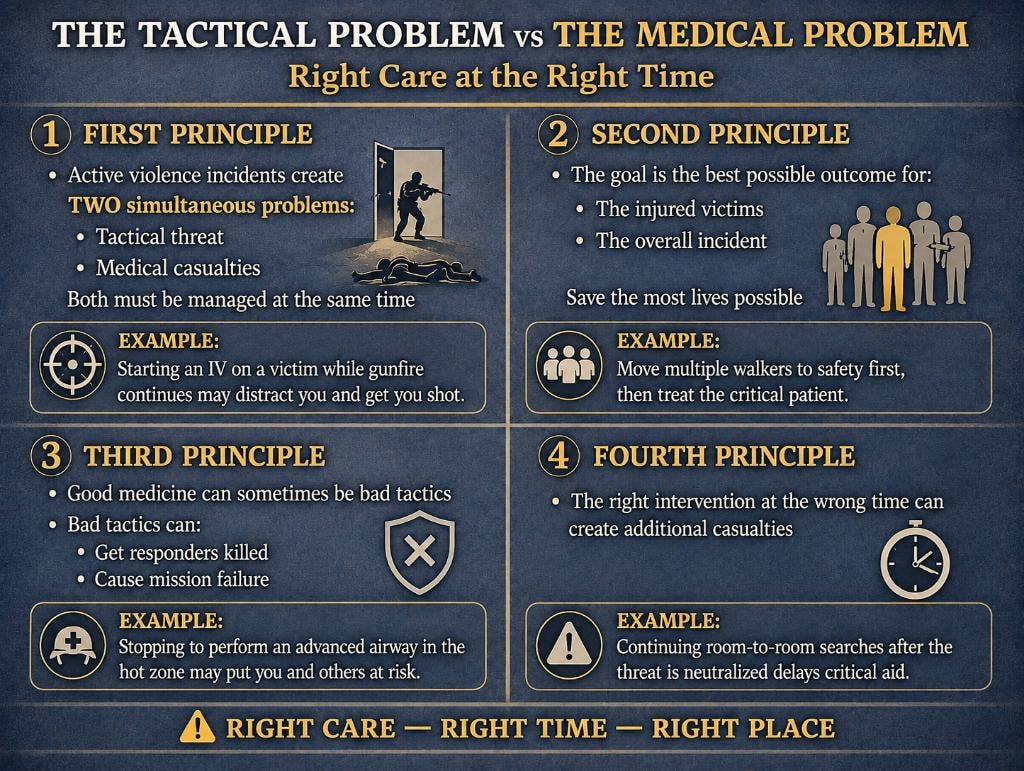
The Four Principles of Tactical Medicine
As taught by NAEMT and TECC programs — the foundational principles that govern every tactical medical decision.
A valuable addition to future courses would be a presentation on the Four Principles of Tactical Medicine as taught by NAEMT and TECC programs.
I would be happy to provide this presentation.
1. Good Medicine Can Be Bad Tactics
Medical interventions must be balanced against the tactical situation.
A medically ideal action may place responders or casualties at greater risk if performed at the wrong time or location.
Example:
2. Bad Tactics Can Be Deadly Medicine
Poor tactical decisions can prevent casualties from receiving life-saving care.
Examples include:
Medical care cannot be effectively delivered until the tactical problem is addressed.
3. The Greatest Good for the Greatest Number
Resources, personnel, and time must be allocated to maximize overall survival.
This principle is especially important during mass casualty incidents where responders cannot focus exclusively on a single patient.
Triage, evacuation priorities, and resource allocation should all support this objective.
4. Preventable Deaths Occur Early
Tactical medicine focuses on rapidly treating the leading causes of preventable death before definitive care is available.
Key priorities include:
This principle forms the foundation of: